|
Many triggers in this story, take caution: neurodivergence, autism, queer, torture, suicide.
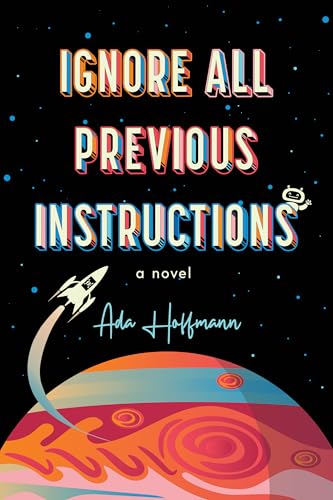
Kelli lives on Callisto, the second-largest moon around Jupiter. She lives in a universe where AI pretty much governs everything. She has always enjoyed telling stories but her society restricts how much can be told without AI input. So she found a job where she interacts with AI to write a television program. She's clever and she knows just how far she can push the program before someone notices and chastises her. Her program is incredibly popular; she's really good at what she does.
Kelli is autistic and queer which drives much of the plot. Her autism is what makes her good at her job; being queer is just something she is and nothing that anyone ever talks about. Being neurodivergent isn't exactly prosecuted but it is certainly whitewashed and swept under a carpet.
The story switches POVs between Kelli-as-a-child and Kelli-in-the-present. As a child she was easily confused and terribly naïve. Because she persisted in demonstrating anti-social behavior, she was assigned a robot to correct her. She was finally befriended by Amelia, who was also neurodivergent but was able to more easily mask. It was Am who figured out how to hack Kelli's robot to allow her more creative freedom. It was Am who helped Kelli understand what 'lesbian' meant; their society completely restricted all information or entertainment models that illustrated queer behavior. Kelli and Am had, literally, nothing to explain themselves but that single word. Into their world of two came Elaine. Elaine had her own set of problems but we didn't have time enough to explore them. Elaine also had an assigned robot but instead of helping her, it only caused her more torture. Quel surprise…and her solution to managing her own anxiety was to have a very long-term effect on Kelli.
Kelli's and Am's reprisal against the system that minimized Elaine's existence and ignored basic humanity was to haunt them throughout their lives. But during that traumatic event, Am came to have a life-changing epiphany. She wasn't really queer; she was something else entirely. And this was something that Kelli couldn't accept.
Fast-forward to Kelli working for a major entertainment outlet. She hadn't heard from or seen Am - now Rowan - for years. But he turns up in her life asking her to help him erase a debt. All she needs to do is come with him to meet a young fan who adores her show and the main character, Orlando. The young woman has a very rich, very indulgent mother who will pay a lot to give her child the experience. Of course, it doesn't go well and then we're off into a criminal heist story. Both Kelli and Rowan are being black-mailed because of what they did as children. Kelli refuses to acquiesce without a fight; but her only tool is her brain which doesn't always work typically and she can't be sure if her attempts to stop the heist will hurt Rowan nor is she sure that she cares about that.
As the author explains in the Afterword, she really wanted to create a story that had something to say to neurodivergent people. As a cis-woman, the story didn't really appeal; it rather felt like she threw in the kitchen sink to include everyone. And while who doesn't love a story in space, it felt like the environment was only necessary to keep the characters and story highly restricted. Only in a small, AI-governed environment could so much information be easily restricted.
As a treatise on 'bad' AI, this was done well without going over the top with Skynet. It's pretty much what's happening at this very moment in time. AI is competing with original thought and content and I'm dreadfully afraid it's winning. We need a lot more stories warning us. We need more awareness of not only AI but also all the ways that neurodivergent people struggle. And they only experience a struggle because we're still trying to fit them into the same peg hole as the rest of us. If we just accept them as people, they wouldn't have to try so hard; they could just live.
While the storyline didn't really appeal to me, I can recognize how well it was constructed and written. The POV of the children was critical to understanding their relationship as adults and the consequences of their actions. The heist story was actually fun as we see Kelli's attempts to understand others' actions and do what she could to feel less manipulated. Her autism did not make her a genius or highly prolific at anything except telling stories. She was just trying to live her life; and telling stories - even to herself - was how she navigated. I liked that, a lot. ~~ Catherine Book
|