|
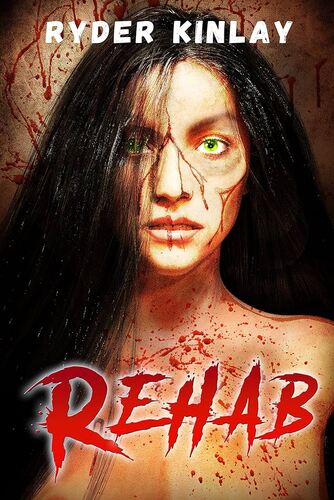
Well, it's safe to say that this is absolutely not what I expected it to be. At a first glance, going by the front cover art, back cover blurb and first page, it looks like an extreme horror novel in which staff at a rehab facility torment Summer Byrnes. I pictured it as torture porn like the gratuitous women in prison or Nazisploitation flicks of the seventies. Given that this facility is located down under in Australia, home to the most prolific Nazisploitation authors, John Slater and Jim Kent, I imagined an extreme horror take on their work. Spoiler: it isn't.
In fact, after a few opening chapters that clearly enjoy exploring taboos, it settles down a lot and frankly starts to feel more like general fiction than horror. Summer is a wife and mother who's in rehab because she's a functional alcoholic. She has everything: she's young and beautiful and rich but she can't keep away from the wine and she honestly wants to fix herself for her family. Some of the other patients are there because they're required to be as part of their jail sentences, but others are there by choice. Eden Creek Rehab, located in the Northern Territory, honestly seems like a decent place to be. Most of the staff care and there's a strong tinge of hope in the air.
Frankly, the hardest aspect to read here isn't found in the details but in the tone. Summer's back story isn't bad but many of her peers in rehab have horrific ones. Chris was abused and lost most of his teeth while being raped in prison. Kate was abused and knocked up by her dad and her post-escape boyfriend wasn't much better. Chomper is Australia's most feared criminal, coincidentally the behemoth who raped Chris in prison. However, this is all detailed with a matter of fact voice as if abuse, whether sexual or substance, is completely normal to these people. This is simply how the world works and that's really not good. It's horrific but it's also really grim reality.
As that might suggest, the writing here is raw. It's not bad, I should emphasise, but it's visceral, a mirror to the characters and the subject matter. None of these people have any sort of polish and so it's appropriate for the writing to follow suit. It feels less like a novel carefully constructed by a writer and more like an outpouring of unceasingly dark reality from someone who has lived in this world and is unburdening herself of the sheer weight of it all through a safe outlet of fiction. The dedication page suggests that Kinlay has gone through addiction, which she powerfully describes as a "goddamn chattering and murderous monkey" on your back.
Once we get past those horrific and often taboo back stories to the nitty gritty of life in rehab, it doesn't seem that awful. Most of the challenges these characters face are internal. These aren't problems to be fixed in a heartbeat with the right lightbulb-sparking-word, they're problems to gradually and painfully work through one step at a time. Some will manage it and others clearly won't. The most obvious external threat, other than the presence of a beast like Chomper, is the constant threat of Chris Jenkins, who's a textbook asshole, always ready with another obscene suggestion for anyone with a vagina and the potential to turn it into reality.
However, Kinlay has every intention of keeping us on the hop. This does become a horror novel in a way that reminds of Stephen King, but it becomes a mystery first. While we expect Chomper to play a prominent part in the horror to come, he apparently commits suicide only six pages in and that doesn't seem right at all. Beyond his connection to Chris, we gradually learn that others are also connected to him and we can't help but wonder if his apparent suicide was disguised murder and look forward to figuring out whodunit. Oddly, that never happens but a different mystery is gradually revealed and that shapes the entire book.
I don't want to talk about much more as it would be easy to venture into spoiler territory, but it's misleading to stop here. Two of the most crucial characters in the book haven't made themselves obvious yet. We've met them, but probably dismissed them as minor supporting characters there to prop up more important ones. I'll mention one because the back cover blurb does. Summer has an eight-year-old son called Robbie and he has a gift that he called Richie that plays an increasing part in proceedings and moves the book firmly into Stephen King territory. The other one I won't name because you should figure that out yourselves.
Robbie starts being important about halfway through the novel when something else important happens that I'm not going to tell you about. It's a powerful scene that escalates everything and underlines why this is a horror novel in thick blood red ink. I was waiting for something like this to happen for a while but I didn't expect it to go this far or be this intense. It threatens to turn this into the extreme horror novel that I expected to begin with, but there's far too much drama and mystery for that to happen. It continues to flout expectations and I'm down with that.
So, at the end of the day, I can see extreme horror fans digging this. Kinlay writes viscerally and is perfectly happy to have characters break taboos in a matter of fact fashion. However, people who don't read horror but do read fiction about the grim realities of addiction might enjoy this too. It must be said that addicts will do things to feed their beast that they would never even consider in a sober state. With addiction, there's a thin line between extreme horror and grim reality. What I wonder the most is whether traditional horror fans, who ought to dig the supernatural elements and karmic justice of the second half, will survive the first half.
I appreciated this novel a great deal. Even given such raw delivery and unorthodox structure, it's a powerful read that resonates in ways I never expected going in. I still want to know more about who killed Chomper though. ~~ Hal C F Astell
|