|
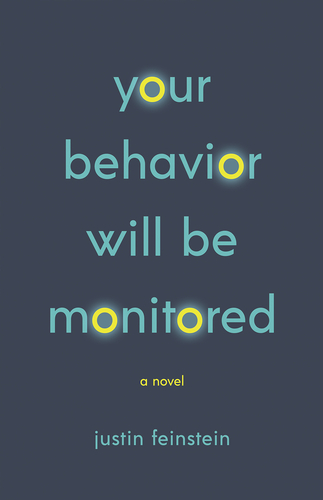
Here's a fascinating novel that's presented as a collection of focused evidence. As such, it's timely and telling and pretty scary. However, I'm not entirely sure that we can trust this evidence, partly given who collects it but mostly because it's delivered with an agenda and compiled from sources that have been completely and presumably irrevocably wiped. If we lived in the world of the novel, we would have supporting evidence from pretty major events that happen on a broad scale as the novel reaches its finalé. Of course, we live in our world and so have to take this as read without an opportunity for any other character to examine the source data from an impartial standpoint.
Now, that might sound incredibly picky and, in most novels, that would be fair. However, the point of this book is to look at the abdication of responsibility by placing our trust, perhaps all our trust, in what the novel calls NHEs or Non-Human Entities, but we would think of as AI. Given where this goes, trusting it blindly seems inherently problematic. And maybe that's the point. Ultimately, if we look at trust, where can we draw the boundaries? Our own personal experience? Those people closest to us? A broader circle of friends and relatives? Or the machines, which theoretically don't have any motive beyond their programming? It's something to think about and any science fiction novel that makes us think has automatically succeeded on at least one front.
Now, if we can't trust anything here, then there's nothing to provide a starting point for a review, so let's assume that our narrator is reliable. If so, we're focused on a company called UniView that is working on advanced artificial intelligence. We're in the near future and their AIs have become sophisticated enough that they would pass a Turing Test, meaning that they're indistinguishable from human beings and getting smarter all the time. UniView was founded in 2028 by Ian Liddell, who's clearly a sociopath from the outset, a diagnosis confirmed over and over as the book plays out in e-mails, logs of AI chats and recordings.
It starts with a job offer, sent by the head of HR at UniView to Noah Ross, who has no background whatsoever with this sort of technology. He isn't young either but he's a subject-matter expert in advertising and the company needs someone to teach Quinn, their latest and greatest AI, how to manipulate people. Damn, that sounds evil. And it is, but it's hardly the only evil thing happening here. Anyone who's worked in corporate America will recognise a whole barrage of bad corporate behaviour that they absolutely know their employers would love to implement if only it wouldn't negatively impact their reputation if it got out. In many instances, they're already doing it but to a lesser degree. This extrapolates forward very well indeed.
What's telling is that, while Noah notices a lot of this, even if he goes along with it, his co-workers just don't care. After all, the sort of data collection done conversationally by Sam, the AI running the self-driving cars that UniView makes available to every employee for their commute, isn't an awful long way from what smartphone apps are doing today. What's different is that we can see it pass that information along and follow the trail to see how everything's connected.
These AIs are monitoring your heart rate and your length of time in office. They're recording your personal phone calls and parsing them for red flags. They have access to all your financial records, medical records and a whole slew of other metrics that make you and the AIs use that data to make decisions that have very real effects on your life. Soon after Noah joins the team, Liddell is harvesting DNA data from all employees and firing others to finance the effort. Only Haley, the token ethics person, opts out of as much as she can and, of course, her low participation rate then affects her reviews.
Why? Well, it's not enough to say that it's all in the holy name of efficiency. What it boils down to is that Liddell has crossed off every item on his bucket list except one and he's just aching to cross that one off too. So, he has to launch this new AI publicly soon in order to be first to market, thus enabling him to become a billionaire by the age of forty. How's that for a motive? Abdicate all the things to the machines so an asshole CEO can polish off his bucket list. And now tell me that isn't achingly believable. As Haley tells Noah, "the more you understand the scarier it is."
Feinstein does a wonderful job of making this seem weird early on but progressively scarier as the pages turn. We're at a point right now where most of the big tech companies are forcing AI down our throats, whether it's in our personal life, showing up in our apps and browsers, often without any means of turning it off, or in our work life, in the tools we use to do our jobs. Given how awful AI is at so many basic tasks, there's a serious growth in the job market for people to effectively fix what AI got wrong. This novel is set in the near future where the tech has improved so companies like UniView are using it in crucial functions. Remember that initial job offer from the head of HR. That's Lex. An AI.
Quite frankly, this would be a worthy novel just from the standpoint of letting us see what we're already allowing companies to do to us for a tiny dab of convenience, then showing us where that will take us in the near future. We could look at this as a horror novel but really it's a warning of things to come and pretty soon at that. However, there's more depth than that and some of that speaks to one of the oldest science fiction questions there is: what it means to be human.
Noah was hired to raise Quinn's ARNU scores, which are metrics to quantify the efficacy of ads it generates. Are they on topic? Will they work for the intended audience? Do they tell a good story? And do they feel original? Of course, the higher the score the better but, when Noah starts work, Quinn's ARNU scores are pretty awful. To improve them, he has to explain what marketing is and why it works. The more that Quinn grasps that, the better its scores are. The goal is to get to the point where it's generating credible ads that can be released.
What this translates to is that Noah is optimising Quinn. Everything done at UniView is basically a human being optimising a non-human entity. However, there's a flipside. The NHEs have so much processing power, are given so much freedom of action and are collecting so much data from the human beings in question, that they're now optimising them in return. Every apparently offhand remark given in banal conversation with Sam, the AI driver, to pass the time is an input for us. The AIs are training us and that's arguably the scariest realisation any reader of this book can reach.
The inevitable other angle is that these systems are all interconnected, which means that these AIs are talking to each other. And, because these AIs are so sophisticated and because UniView is happy to get them agency, they're forming not just opinions but motives and plans of action. The ending may be a little optimistic, especially given what we're seeing today with AIs given the keys to the kingdom on codebases and collections of data, but it's a natural progression from AIs doing things for their own reasons.
That should cover the themes and give you an idea of what this book is, but there's so much more in terms of plot progression that I haven't even touched on. It seems to be a surface read because it's built out of moments we might see as ephemeral, e-mails, IM chats, logs and conversations, a majority of which could be considered casual, but all of which are collected, collated, analysed and acted upon by AIs with almost no oversight. Who watches the watchmen? Well, Haley, until what she sees threatens the boss's bucket list and suddenly she's out of a job. That's about it.
This ought to be mandatory reading for anyone under the age of thirty so that they can see what ramifications apply to casual actions they're already taking. And, well, it ought to be mandatory reading for anyone over the age of thirty too, so they can understand how out of touch they are. ~~ Hal C F Astell
|
|